
Upholstery services in Kingseat & surrounding areas: Papakura, Pukekohe, Waiuku
020 4181 4313 · Mon – Fri 10am – 4pm, Sat by appointment
Squabs, berth cushions, helm seats and cabin trim re-covered – plus biminis, dodgers, covers and clears. Built for salt, constant damp and the hardest UV in the world, because that is the job here.
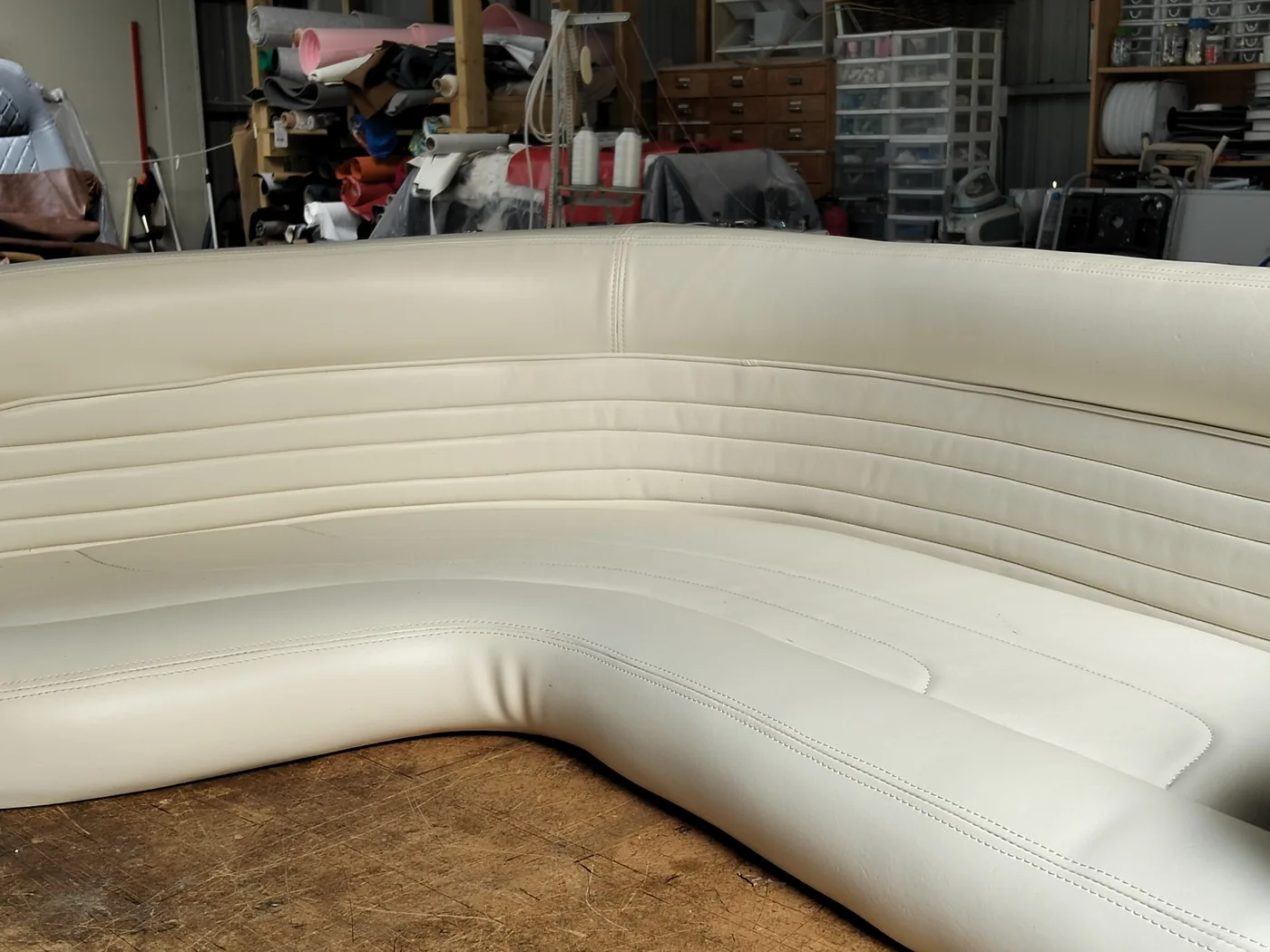
New covers and new foam for cockpit squabs, berth and V-berth cushions, saloon seating and backrests – cut to the boat rather than to a rectangle, so they sit down properly against curved hull sides.
Skipper and passenger seats re-covered, split seams repaired, collapsed foam and bolsters rebuilt, and pedestal or jockey seats re-trimmed to match the rest of the cockpit.
Headlinings and cabin sides re-covered, hull-side panels remade, locker fronts, bunk boards and companionway trim brought back to match the new cushions.
Boat and console covers, biminis, spray dodgers, weather curtains and clears: new builds patterned on the boat, plus repairs, re-stitching and window replacement on canvas that is otherwise sound.
Exterior cushions need dry-fast foam, not standard upholstery foam. Anything that lives in an open cockpit gets wet, and ordinary polyurethane foam holds that water in its closed cells — the squab stays heavy for days and grows mould from the inside out. Open-cell reticulated foam, sold as dry-fast, drains straight through and dries in hours. We use it on every exterior cushion as standard and keep the softer, denser foams for cabin and berth work.

On a cover that lives outside, the fabric almost always outlasts the thread holding it together. Standard polyester loses well over half its breaking strength in its first year of full sun, which is why so many covers come in with sound acrylic and every seam letting go. Under New Zealand’s UV — around 40% stronger than the same latitude in the northern hemisphere — that timeline is shorter again.
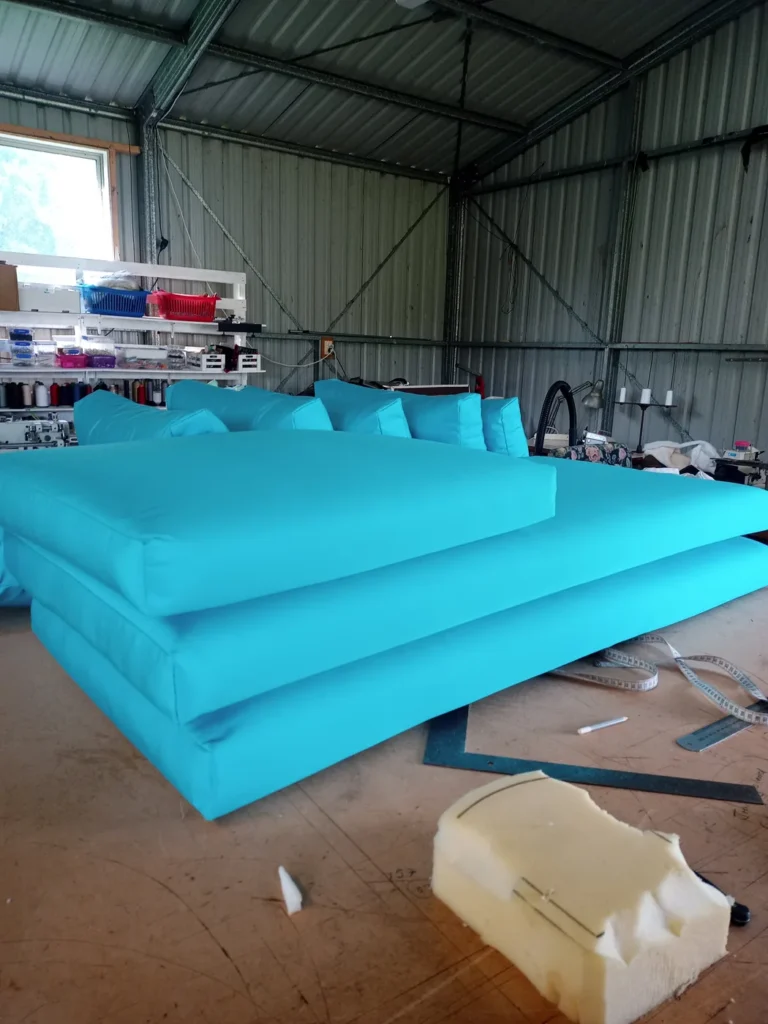
A full set re-covered in marine vinyl over dry-fast foam, with drainage through the base so they shed water instead of holding it.
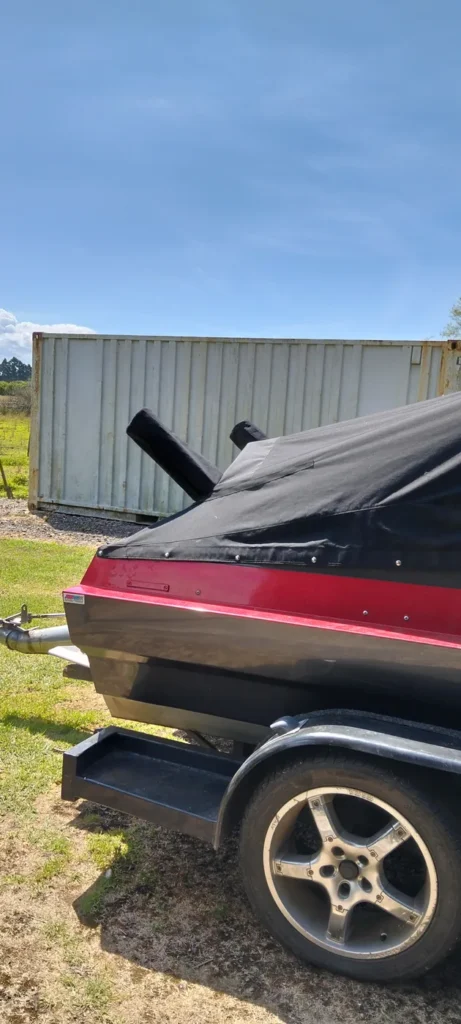
Full boat cover patterned on the hull and stitched in PTFE thread, with reinforced tie-down points and a fit that sheds water instead of pooling it.
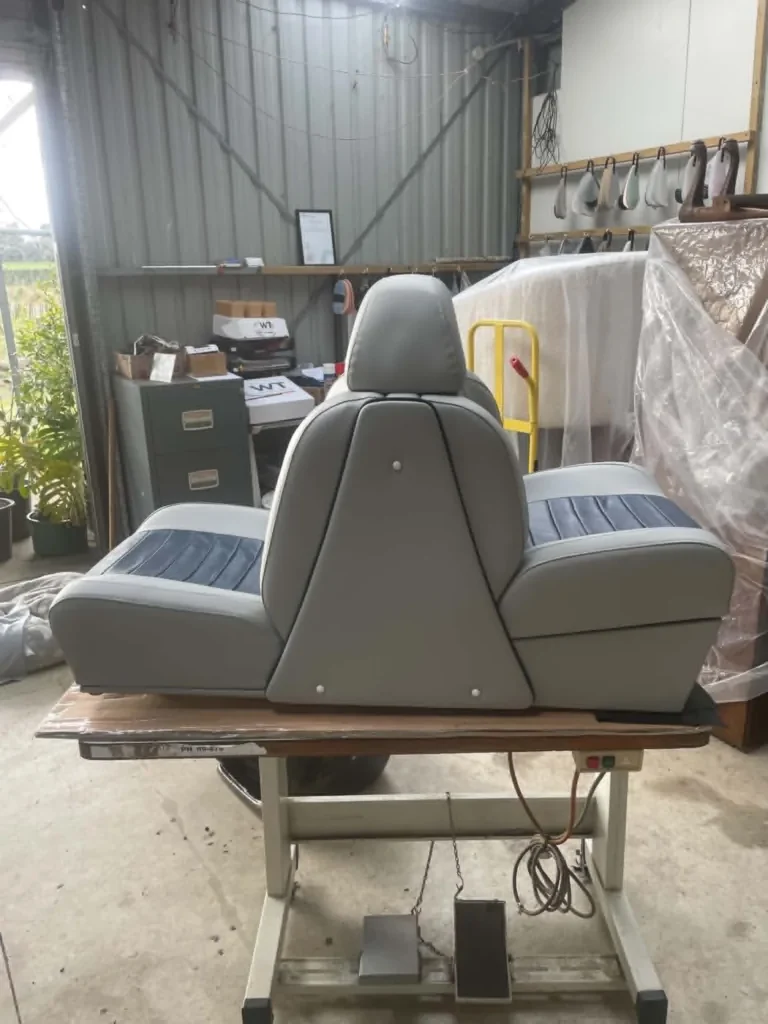
Skipper and passenger seats re-covered in marine vinyl over new foam, with the bolsters rebuilt so they hold shape under load.
Almost always the foam. Standard upholstery foam is closed-cell enough to trap water, so once a cockpit cushion is soaked it stays soaked, gets heavy and starts to smell. Re-covering it without changing the foam buys you a few months. The fix is open-cell reticulated dry-fast foam, which drains through and dries in hours, usually with drainage grommets or a mesh base so the water has somewhere to go.
It matters more than the fabric on anything left in the sun. Ordinary polyester thread can lose over half its breaking strength in its first year of exposure, so covers routinely fail at the seams while the cloth is still sound. On permanently exposed work we use PTFE thread, which is effectively immune to UV; on covers that live in a locker, UV-bonded polyester is the sensible five-to-ten-year option at a fraction of the cost. We will quote whichever suits the boat and tell you why.
Expect a handful of seasons before hazing and fine crazing start to show, sooner if they are cleaned badly. Rinse with fresh water first so grit does not get dragged across the surface, then use a soap or polish made for clear vinyl and a microfibre cloth — never paper towels. Ammonia-based glass cleaners, alcohol, mildew removers, sunscreen and insect repellent all attack the coating, and that damage does not polish out. Once the yellowing will not lift, the panel is replaced rather than restored, and the surrounding canvas usually has plenty of life left.
Usually, though on an older boat the original material is rarely still made. The practical approach is to re-trim the adjacent parts — backrests, hull linings, locker fronts — in the same material rather than trying to match one new cushion to a faded original. We’ll tell you which of those two you’re looking at before you commit.
Both. New biminis, dodgers, covers and weather curtains are patterned on the boat itself, because a cover cut from measurements alone never sits right around a frame. Where the fabric is still sound, re-stitching a whole cover, replacing the windows or renewing the zips and fasteners is a much cheaper job than a new build, and we’ll say so if that’s what your cover needs.
We can work on the boat when in our area; small vessels can be accessed in the yard. To be decided on case by case basis.
This depends on multiple variables including but not limited to fabric availability, job complexity, foam and frame condition, unforeseen complications.
Send a few photos through, or give us a call and we’ll talk it over.